
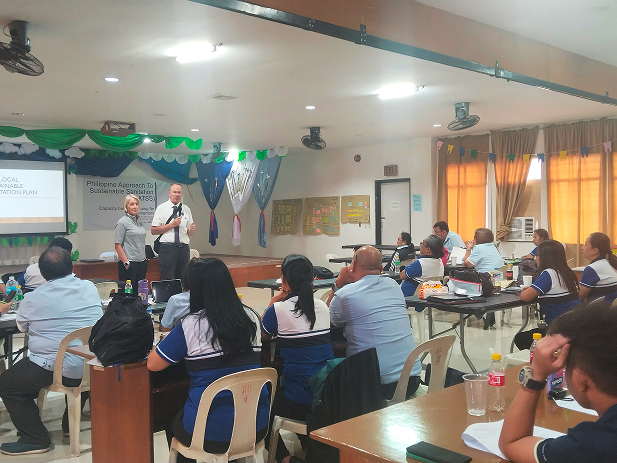
WaSH governance is prioritizing service delivery, putting in place governance structure so that investments and services related to safe water supply, sanitation and effective behavior change messages reaches the vulnerable sector, and produce impact for reduced mortality and morbidity caused by unsanitary environment. The DOH administrative order 2019-0054 otherwise known as the Philippine Approach to Sustainable Sanitation (PhATSS) requires LGUs to prioritize WaSH services in local government plans and investment.
The PhATSS policy enjoins a three-pronged approach to implementation; 1) strengthening the enabling environment for WaSH development, 2) institutionalizing WaSH behavior change in the communities and learning centers, and 3) engagement of service providers as significant stakeholders to WaSH development. Simply put, the government provides the enabling environment as the Duty Bearer, the community and learning centers create demand for appropriate WaSH services, and the suppliers provide product and services to fill the demand.
The policy requires LGUs to craft their local sustainable sanitation plans, allocate funds for the PPAs identified, effect a doable and ladderized zero open defecation program targeting the marginalized and vulnerable members of the population. These same targets support the achievement of targets articulated in the SDG goal #6 of the United Nations which calls for universal access to sustainable water and sanitation services by 2030.
The city of Manila is the first city in the national capital region to have started a ZOD program in the barangays. ZOD certification started in 2024, attaining 54 verified zero open defecation barangays. Presently, this program is put on hold, awaiting the passage of the City WaSH ordinance from the city council. The consequent passage of this ordinance will usher a renewed vigor for the city to effectively bring much needed WaSH interventions to the marginalized and vulnerable informal settler families in the city.
The partnership, through the generous funding provided by the Church of Jesus Christ of Latter-day Saints constructed 3 communal WaSH facilities in ISF communities; in Barangays 286, 128 and 648. These communal WaSH facilities are managed and operated by community members who were trained with ASDSW’s brand of empowering capacity building training for operation and maintenance. The facilities’ O&M costs are sustained by user’s fee, the amount of which varies from site to site, depending on the cost of water, electricity and set compensation for the O&M group which takes care of the maintenance of the facilities. These facilities were constructed to serve as pilot models of sustainable community WaSH facilities which provides toilet and bath services to target beneficiaries.
Presently, these WaSH facilities are already servicing the target users and are now gaining appreciation from their communities. The served population may increase but it remains fact that there are still a lot of communities that needs similar interventions in the nation’s capital and 2nd most populous city in the national capital region. This concern needs a concerted action from stakeholders such as the water companies, the schools, the Metropolitan Manila Development Authority, the National Housing Authority among others. The going may be slow, but with determined governance action, development can be attained … soon, I hope.